

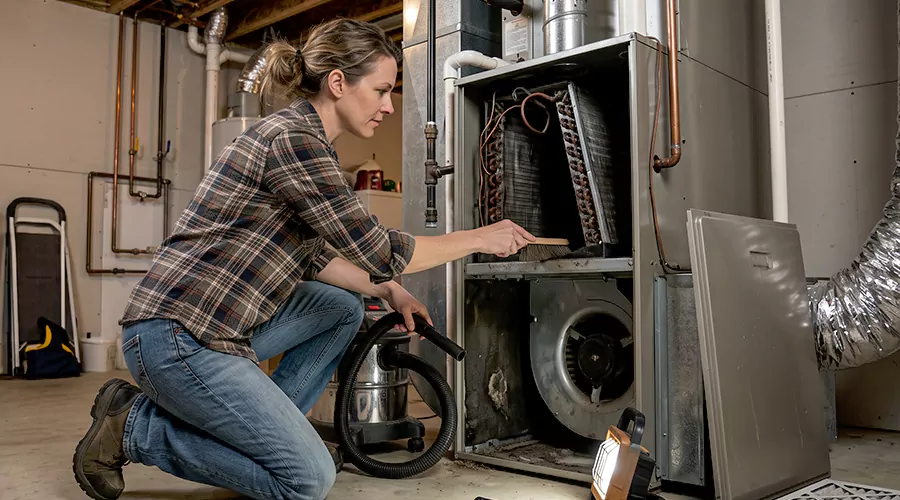
Air handler cleaning commonly costs between $100 and $450 for many residential cleaning services in the United States, depending on which components need attention. Professional evaporator coil cleaning typically costs $100 to $400 when performed in place, while blower wheel cleaning commonly ranges from $125 to $250. More extensive cleaning involving several components or major disassembly can cost considerably more.
An air handler circulates heated or cooled air through the ductwork in a home. It commonly contains a blower assembly, evaporator coil, air filter location, and condensate drainage components. As the system operates, dust may accumulate on the blower and cooling coil, while moisture and debris can collect in the drain pan.
These conditions can affect performance when deposits become substantial. A heavily loaded filter restricts airflow, while a dirty evaporator coil can interfere with cooling. A blocked condensate drain may cause water to overflow into the cabinet or surrounding building materials. Professional air handler unit cleaning addresses the affected components before the buildup creates more serious problems.
However, the phrase air handler cleaning can describe several different services. One company may quote only blower cleaning, while another includes the coil, cabinet, and drainage system. Understanding the individual costs and what a complete service involves helps homeowners compare estimates accurately.
What Is the Average Air Handler Cleaning Cost in 2026?
There is no single standardized national average for cleaning an entire air handler because contractors define the service differently. Published 2026 estimates place basic blower or air-handler cleaning around $100 to $450, while individual components have more specific price ranges. A detailed cleaning that includes both the coil and blower may require a larger budget.
The following are representative U.S. prices for common services associated with an indoor air handler.
| Air Handler Cleaning Service | Estimated U.S. Cost |
|---|---|
| Basic blower or air-handler cleaning | 100–450 |
| Evaporator coil cleaning in place | 100–400 |
| Blower wheel cleaning | 125–250 |
| Evaporator coil removal and cleaning | 400–700 |
| Basic AC maintenance or tune-up | 70–200 |
| Broader HVAC cleaning and maintenance | Varies with the components included |
These prices describe different scopes and should not automatically be added together. A basic cleaning package may already include part of the blower inspection or filter maintenance. Some companies also offer a combined price when several components are cleaned during one visit.
Actual prices can exceed these planning ranges. For example, one HVAC contractor's published 2026 rate card lists $500 for air handler coil cleaning and $400 for blower cleaning. Local labor rates, access conditions, and the amount of disassembly can create substantial differences between quotes.
The most reliable estimate identifies which components are dirty and what work is necessary to restore them. A price that simply says air handler cleaning without further detail is difficult to evaluate.
How Much Does Air Handler Cleaning Cost by Component?
An air handler contains several components that require different cleaning methods. A washable filter can often be maintained by the homeowner, while an indoor cooling coil may require specialized access and careful handling. Cleaning the blower assembly can also become more involved when the wheel must be removed.
Air Handler Filter Cleaning or Replacement
The air filter is usually the least expensive component to maintain. Many systems have disposable filters that homeowners replace through a designated access point. Other systems contain reusable filters that can be washed according to the manufacturer's instructions.
A technician may check the filter during a routine maintenance visit, although the replacement filter itself can be billed separately. The exact material cost depends on its dimensions and construction. A high-filtration filter is not automatically appropriate if it creates too much resistance for the equipment.
Filter maintenance should not be confused with a complete air handler cleaning. A clean filter reduces the amount of dust entering the equipment, but it cannot remove deposits already attached to the blower wheel or evaporator coil.
Evaporator Coil Cleaning
An indoor evaporator coil removes heat from circulating air during cooling. Its thin metal fins provide a large surface for heat transfer. When dust collects on those fins, airflow and cooling performance can be affected.
Professional cleaning in place typically costs $100 to $400. The technician may remove loose debris using suitable tools and apply a compatible coil cleaner when required. The procedure must protect nearby electrical components and avoid bending the delicate fins.
If heavy contamination cannot be removed while the coil remains installed, removal may be necessary. Removing and cleaning an evaporator coil commonly costs $400 to $700. This work can involve handling the refrigerant circuit and is substantially more involved than ordinary in-place cleaning.
Blower Wheel Cleaning
The blower wheel moves air through the equipment and into the ductwork. Dust can accumulate along its curved blades, particularly when air bypasses a poorly fitted filter. Thick deposits may affect the blower's ability to move the intended amount of air.
Published cleaning estimates commonly range from $125 to $250. However, the price may be higher when the blower assembly must be removed from a difficult location. The contractor should explain whether the wheel will be cleaned in place or taken out for more detailed work.
Cleaning must also protect the motor and electrical connections. A damaged motor or blower wheel is a separate repair rather than an additional cleaning step.
Condensate Pan and Drain Cleaning
The condensate pan collects water that forms on the evaporator coil during cooling. The water should then flow into a drain line and leave the equipment. Sediment can accumulate in these components and may contribute to blockages.
Cleaning the pan and checking the drain may be included in routine HVAC maintenance. A severely clogged line or damaged drain assembly may require separate service. The final price depends on whether the problem is ordinary buildup or a physical defect.
A blocked condensate line can cause water to collect around the air handler. Simply wiping the pan does not correct a damaged drain or improper slope. The technician should confirm that water can leave the system normally after cleaning.
Air Handler Cabinet Cleaning
The cabinet contains the blower and other internal equipment components. Dust may accumulate on its accessible surfaces, especially around poorly sealed filter openings. Sound cabinet surfaces can often be cleaned during a maintenance visit.
However, some cabinets contain internal fiberglass insulation that requires careful handling. Aggressive brushing or excessive moisture can damage this material. Wet or moldy insulation may need replacement rather than ordinary cleaning.
Cabinet cleaning is often included in a broader air handler service. Before paying a separate charge, ask whether the work involves substantial internal deposits or simply wiping accessible panels.
What Factors Affect Air Handler Cleaning Prices?
The final price depends on the air handler's size, location, and condition. Different equipment designs provide different levels of access to the cooling coil and blower assembly. The amount of disassembly needed often has a greater effect on labor than the physical size of the cabinet.
Size and Type of Air Handler
Residential air handlers vary in cooling capacity and cabinet design. Larger equipment may contain bigger coils or blower assemblies that take longer to clean. However, capacity alone does not determine the amount of work.
A compact unit with difficult internal access may be more expensive to service than a larger unit with removable panels. The technician should identify the specific model and cleaning procedure before quoting detailed work.
Commercial air handlers are a separate category because they can contain multiple fan sections, larger coils, and more complicated drainage systems. Ordinary residential price ranges should not be applied directly to those installations.
Accessibility
Air handlers installed in utility closets or accessible basements may be relatively easy to service. Equipment located in hot attics or restricted crawlspaces can take longer to reach and disassemble safely. Limited working clearance may also affect which cleaning tools can be used.
A technician may need additional time to remove a blower assembly from a narrow cabinet. This can increase labor even when the component contains the same amount of dust as one installed in an open utility room.
Unsafe access should never be treated as a minor inconvenience. Equipment positioned above unfinished ceiling areas or near exposed electrical components requires appropriate working conditions.
Amount of Dust and Debris
Light surface deposits may require only limited cleaning. A blower wheel containing thick dust along its blades needs more detailed attention. Heavy coil buildup may also require a more involved procedure than simply removing dry particles from the accessible side.
The amount of dirt should be documented before a contractor recommends expensive cleaning. A dusty filter alone does not prove that the coil and blower require complete disassembly. Inspection helps establish which components are actually affected.
Moisture and Drainage Problems
Moisture can complicate cleaning when the condensate pan or internal insulation has been affected. A drain blockage may require separate work before the cabinet can be restored. If water has reached surrounding building materials, the problem may extend beyond the HVAC equipment.
Suspected microbial contamination also requires careful evaluation. Not every dark deposit is mold, and a musty odor does not identify the exact source. Cleaning should follow the actual condition rather than an unsupported assumption.
Local Labor Rates
HVAC labor rates vary by market and service company. A firm may use a flat price for coil cleaning or charge according to how much disassembly is required. Minimum diagnostic fees can also affect smaller projects.
Ask whether the estimate includes the initial inspection. Some companies apply the diagnostic charge toward the completed service, while others bill it separately. Comparing the final total and the work included is more useful than comparing an hourly rate alone.
What Is Included in Professional Air Handler Cleaning?
A professional air handler cleaning should address the components identified during inspection. The technician should remove suitable deposits without damaging the coil, blower, or electrical equipment. The completed service should also leave the cabinet secure and the condensate system functioning properly.
Typical work may include:
- Inspecting the air handler and checking its filter.
- Identifying buildup on the evaporator coil and blower.
- Isolating the equipment safely before internal service.
- Removing suitable deposits from affected cabinet surfaces.
- Cleaning the blower wheel when needed.
- Cleaning the evaporator coil using compatible methods.
- Checking the condensate pan and drainage line.
- Inspecting cabinet seals and internal insulation.
- Reinstalling service panels and required components.
- Checking airflow and normal operation after service.
Not every cleaning appointment requires all these steps. A system with a clean blower may only need coil cleaning and drainage maintenance. Conversely, heavy blower contamination may justify more detailed work even when the coil is relatively clean.
The estimate should identify which tasks are included and which would require additional approval. A clear scope helps prevent unnecessary service charges.
What Is the Difference Between Basic and Deep Air Handler Cleaning?
Basic cleaning generally involves accessible components and ordinary maintenance. Deep cleaning addresses substantial internal deposits that require additional access or disassembly. The terms are not standardized, so contractors may use them differently.
| Cleaning Level | Typical Work | Price Consideration |
|---|---|---|
| Basic maintenance | Filter check, inspection, accessible cleaning | May fit a normal tune-up |
| Blower-focused cleaning | Removing deposits from blower wheel | Commonly 125–250 |
| Coil-focused cleaning | Cleaning evaporator coil in place | Commonly 100–400 |
| Deep component cleaning | Blower and coil cleaning with more disassembly | Requires detailed combined quote |
| Coil removal and cleaning | Removing coil for more involved service | Commonly 400–700 |
| Cleaning with repairs | Cleaning plus correcting physical defects | Separate repair charges |
A contractor should explain why the additional work is needed. Heavy buildup may justify more labor, but the word deep does not establish a standard procedure by itself. The important question is which components will be cleaned and how the results will be checked.
Does Air Handler Cleaning Include Air Duct Cleaning?
Air handler cleaning and air duct cleaning are usually separate services. The air handler contains the equipment that circulates and conditions air, while the ductwork distributes that air through the building. Cleaning one does not automatically address deposits inside the other.
Published U.S. estimates commonly place residential duct cleaning between $271 and $509 for many projects, with more extensive whole-house services costing more. That price generally refers to the duct network rather than detailed cleaning of every component inside the air handler.
Some providers sell combined packages. Before accepting one, ask whether the price covers supply and return ducts, blower cleaning, coil cleaning, and condensate drainage. These services should be listed individually even when offered under one total.
The Environmental Protection Agency does not recommend routine air duct cleaning simply because ordinary dust is present. A dirty coil or blower does not automatically mean that every duct branch needs professional cleaning.
How Long Does Air Handler Cleaning Take?
A basic maintenance visit may take approximately 30 to 90 minutes when the equipment is accessible and requires limited cleaning. More involved work on the coil or blower can take several hours. Removal of major components may require additional time and a separate appointment.
The exact duration depends on the equipment's construction and the amount of buildup. A blower wheel that can be cleaned in place may require less labor than one that must be removed. Likewise, coil cleaning becomes more complicated when access is restricted.
A technician should not rush through disassembly or leave electrical components exposed to meet a short appointment time. Proper reassembly and operational checks are part of the service. The final condition of the equipment is more important than the number of minutes spent cleaning.
Can You Clean an Air Handler Yourself to Save Money?
Some basic tasks can be completed safely by homeowners. Replacing a filter through a designated access slot and cleaning surrounding surfaces are ordinary maintenance activities. The equipment manufacturer's instructions should determine what work is appropriate.
Internal blower and evaporator coil cleaning requires greater care. The cabinet may contain electrical components that remain hazardous even when the thermostat is switched off. The coil also contains delicate fins and refrigerant connections that can be damaged by improper handling.
For these reasons, household maintenance should generally stop at approved access points. A homeowner can reduce unnecessary service costs by maintaining the filter and keeping the surrounding area clear. More involved cleaning should be completed by a qualified technician.
Is Air Handler Cleaning Worth the Cost?
Air handler cleaning can be worthwhile when dust or other deposits are affecting the equipment's operation. ENERGY STAR recommends keeping cooling coils clean and inspecting blower components because buildup can reduce cooling performance and airflow. Removing significant deposits can help restore the equipment to its intended operating condition.
However, cleaning does not correct every HVAC problem. A failed blower motor or refrigerant leak requires a different repair. The technician should determine whether dirt is actually contributing to the reported symptoms before recommending cleaning.
The strongest reason to approve a detailed cleaning is documented buildup on the affected components. A contractor should be able to explain the condition and show where the deposits are located. This is more useful than purchasing an expensive package without an inspection.
How Often Should an Air Handler Be Cleaned?
Air handler maintenance involves different intervals for different components. ENERGY STAR recommends checking filters monthly and cleaning or replacing them as required. Many HVAC manufacturers also recommend annual professional cooling-system maintenance.
Internal coil and blower cleaning should be based on their condition rather than performed aggressively on every visit. A clean coil does not require unnecessary chemical treatment. A visibly dirty blower may need attention before the next scheduled annual service.
A practical maintenance approach includes regular filter checks and periodic professional inspection. Condensate drainage also deserves attention during cooling season because blocked lines can cause water damage. Following the equipment manufacturer's instructions provides the best starting point.
What Should You Ask Before Hiring an Air Handler Cleaning Professional?
A written cleaning estimate should explain the work and identify any additional charges. This is particularly important when one contractor includes the coil and blower while another quotes them separately. Comparing the scope prevents confusion over the final price.
Ask these questions:
- Is the quoted price for the complete air handler or one component?
- Will the evaporator coil be cleaned in place?
- Is blower wheel cleaning included?
- Does the service cover the condensate pan and drain?
- Will any major components be removed?
- Are filter replacement and materials included?
- What condition justifies the proposed cleaning?
- How will the equipment be checked afterward?
A contractor should also explain whether the work involves cleaning or repair. Replacing a defective motor is not part of an ordinary cleaning service. The homeowner should approve the additional work separately.
How Can You Prevent Expensive Air Handler Cleaning?
Regular filter maintenance helps reduce particles reaching the coil and blower. Use a properly fitted filter recommended for the equipment and replace or clean it when required. A filter that is missing or installed incorrectly can allow unnecessary dust to collect inside the cabinet.
Keep return grilles clear and avoid storing objects against the equipment. Check accessible areas for water staining that may indicate a drainage problem. Prompt attention to condensate issues can help prevent damage to internal insulation and surrounding materials.
Annual professional maintenance can identify buildup before it becomes substantial. Ask the technician to document the condition of the coil and blower rather than recommending the same intensive cleaning package at every visit. This approach helps focus spending on work that is actually needed.
Conclusion
Air handler cleaning can cost $100 to $450 for many basic or component-focused services, while more extensive work may cost substantially more. In-place evaporator coil cleaning commonly costs $100 to $400, and blower wheel cleaning generally costs $125 to $250. Access conditions and the amount of disassembly strongly affect the final price. Cleaning should address documented deposits rather than automatically include every component. Before booking, request an estimate that identifies the coil, blower, cabinet, and drainage work separately.